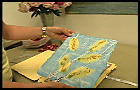
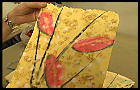
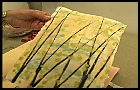
Creating a booklet made of pulp-painted handmade paper that can be personalized with journaling, collage and photos.
Also seen on Cable Television: HGTV Program 'That's Clever!', Episode HCLVR-130, Handmade Paper Booklet
Materials:
old blender (not used for food)
10 sheets of 8-1/2" x 11" 100 percent cotton rag paper, white or cream colored
2 sheets of any contrasting color 100 percent cotton rag paper
dried flower petals
dried herbs
cookie cutter
turkey baster
sparkles, sequins, fabric scraps, ribbons
papermaking mould and deckle (makes the shape of the paper)
large sponge
shallow plastic vat
Plexiglas sheets or windowpanes
3" brush
Steps:
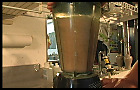
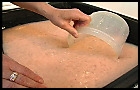
1. Soak paper sheets overnight. Tear individual sheets and place in a blender filled three-fourth with water. Add one torn sheet at a time and blend for a few seconds until paper is pulped (figure A).
2. Add pulp to a vat that contains about eight inches of water and agitate the pulp in the vat by stirring the mixture vigorously (figure B).
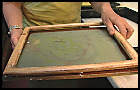
3. Place the deckle (frame) on top of the mold (figure C), then place the unit into the vat and slide it toward you until the pulp has filled up the screen. Lift the mold and deckle out of the vat, keeping them level.
4. Allow the pulp to drain and remove the deckle.
5. Apply a sponge to the underside of the mould to remove the water.
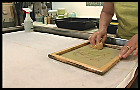
6. Transfer or "couch" the pulp to a wet cloth. Remove excess water with a sponge (figure D).
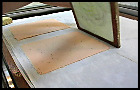
7. Gently peel the papermaking screen (mold) off the paper by lifting one edge (figure E).
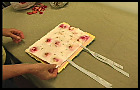
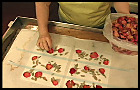
8. Decorate the cover sheets using flower petals, leaves, ribbons, etc (figure F).
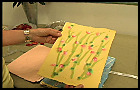
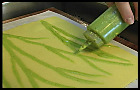
- Put alternative colors of paper pulp into squeeze bottles and use them to paint onto the inside sheets of the book (figure G).
- Add herbs such as dried lavender.
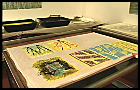
9. Spray Plexiglas or windowpanes with water and transfer the wet sheets onto the surface (figure H). Let dry.
10. Assemble the sheets into a booklet form.